
As a major industrial city in southern Pakistan, Karachi is home to a large number of textile and dyeing enterprises. With rising energy costs, more and more factories are switching from traditional fuel oil boilers to renewable biomass boilers to reduce production costs and meet environmental requirements.
In July 2024, the EPCB technical team was invited to Karachi to conduct technical discussions and solution assessments for a well-known local textile factory, developing a fuel oil boiler upgrade and energy-saving renovation plan. The textile factory ultimately chose the EPCB double-drum biomass steam boiler and successfully achieved stable operation and significant energy savings.
The textile factory’s original fuel oil boiler had been in use for a long time, and its operation gradually revealed multiple problems: On the one hand, fuel oil prices were significantly affected by international market fluctuations, resulting in high unit steam costs and continuous pressure on the company’s energy budget; at the same time, the old boiler’s heating surface was severely scaled, and incomplete combustion caused significant flue gas heat loss, resulting in low thermal efficiency, frequent malfunctions, and high annual maintenance costs.
On the other hand, the boiler emissions failed to meet local environmental standards, with particulate matter concentration and flue gas opacity exceeding limits multiple times, leading to frequent environmental inspections and increased risk of shutdowns. More importantly, there were abundant rice husk resources available in the area surrounding the factory every season. If these could be used as fuel, production costs would be significantly reduced, but the previous old boiler did not support this type of biomass fuel.
Based on the above situation, the client’s core demands were clear: to reduce energy costs, improve operational stability, ensure environmental compliance, and effectively utilize local low-cost rice husk resources to achieve a more sustainable energy structure.
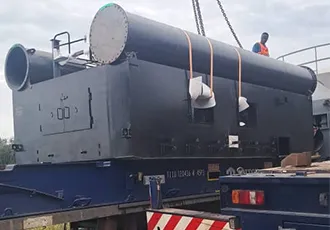
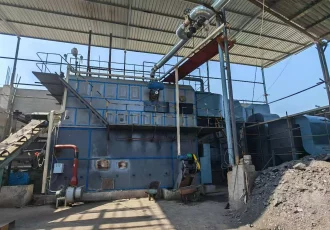
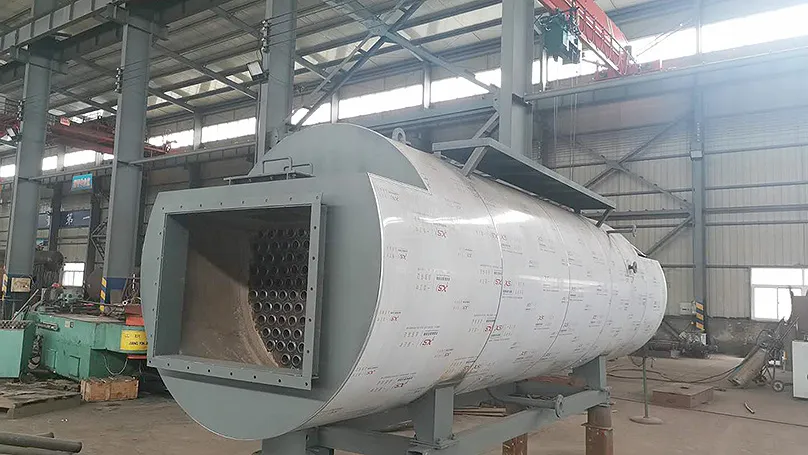
After on-site assessment of the workshop layout, steam demand, local rice husk characteristics, and emission requirements, EPCB recommended the SZL10 double-drum vertical biomass steam boiler system.
1. Structural Advantages: Specifically designed for lightweight biomass
Double-drum water tube structure with a large heating surface area
Enlarged combustion chamber design to improve rice husk combustion efficiency
Specialized mechanical feeding system to prevent fuel accumulation
The boiler body uses boiler-specific steel, with all welds fully inspected.
This structure is particularly suitable for biomass fuels like rice husk, which are lightweight, have high ash content, are prone to floating, and easily form slag.
2. High-Efficiency Dust Removal System, Emissions Meet Pakistani Standards
To ensure stable and compliant emissions, EPCB equipped the client with:
Cyclone dust collector (to remove large particulate matter)
Wet scrubber (to further reduce dust concentration)
Optimized furnace combustion design to reduce black smoke generation
The final emission data fully met the requirements of the local environmental protection department, saving the factory from fines and production shutdown risks.
3. Transparent Cost Accounting and Predictable Energy Saving Effects
EPCB provided a detailed comparison of fuel costs:
Item | Fuel Oil | Rice Husk |
Unit Cost | High | Very low (locally abundant) |
Supply Stability | Strongly affected by international market fluctuations | Locally available agricultural waste, supplied year-round |
Steam Cost per Unit | High | 30–40% lower |
Environmental Emissions | Higher | More environmentally friendly |
Based on the above comparison, the client had a clear understanding of the energy-saving effects and was confident in reducing operating costs.
EPCB boiler also provided comprehensive and clear after-sales service guarantees, including sending a professional team to the site for installation and commissioning, ensuring the equipment was successfully put into operation according to standards; providing tailored training on the characteristics of rice husk fuel, explaining combustion control, feeding strategies, and maintenance points; providing hands-on guidance to operators before the equipment officially starts operation, enabling them to master the system operation procedures and daily management; and providing long-term spare parts supply and remote technical support after project delivery to ensure the boiler remains stable throughout its service life. This series of comprehensive service commitments significantly enhanced customer trust and laid a solid foundation for cooperation.
During the project execution phase, the textile factory required the removal of the old boiler and the installation and commissioning of the new biomass boiler in a very short time to resume production as quickly as possible. However, local summer temperatures reached 40°C, and the rice husk fuel was light, had high ash content, and was prone to flying dust, posing higher demands on construction management and combustion system tuning. At the same time, it was necessary to optimize the feeding system and grate speed during the installation process to ensure the stability of subsequent combustion. Faced with these challenges, the EPCB engineering team quickly developed and implemented solutions: improving combustion uniformity by precisely adjusting airflow and air distribution structure, rationally setting the grate operating speed to significantly reduce slagging problems, and ensuring the combustion chamber was in optimal working condition through actual boiler negative pressure measurements; all operating nodes underwent rigorous safety and performance verification. Ultimately, the team completed the boiler body installation, piping layout, electrical control system wiring, dust removal device commissioning, and operator training in just 30 days, far exceeding the client’s expectations and providing strong support for the factory’s smooth resumption of production.
After the boiler was officially put into operation, the operating data fully demonstrated the efficiency and reliability of the EPCB solution: thermal efficiency consistently reached 88%, resulting in more complete combustion and lower flue gas losses, and cleaner overall emissions; using locally sourced, low-cost rice husk as fuel significantly reduced the unit steam cost, reducing the company’s energy consumption expenses by approximately 30%; mechanized feeding and optimized grate design ensured stable boiler operation, less slagging, and significantly reduced downtime. The textile factory owner, Kareem, highly praised the boiler’s stability and the professional service of the EPCB team, and stated that EPCB would be his preferred choice for future expansion projects. This not only reflects the client’s trust but also further strengthens EPCB’s excellent reputation in the Pakistani market.
Conclusion
This project fully demonstrates the high cost-effectiveness and reliability of the EPCB 10 ton biomass Steam boiler in overseas applications: by using local rice husk fuel, the client’s energy costs were reduced by approximately 30%, and emissions consistently met environmental requirements; the boiler’s thermal efficiency reached 88%, and its operation was continuously reliable; at the same time, EPCB boiler ensured the smooth commissioning of the system with a rapid 30-day delivery and comprehensive technical support, providing the client with a safe, efficient, and energy-saving overall solution.
Successful Cases
Elevate your paperboard packaging concepts from conception to realization with our comprehensive end-to-end solution, ensuring a seamless journey from ideation to final product.
Customize Your Boiler Solution
Tell us your need for boiler capacity in your industry, we will recommend the most suitable boiler model for you!